

The Wanli Emperor of the Ming dynasty in China reigned from 1572 to 1620. He was nine years old when he came to the throne on the death of his father, the Longqing Emperor.
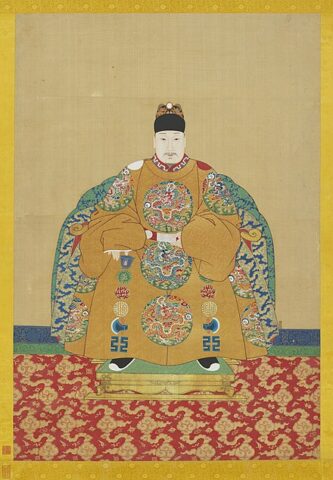
The Wanli Emperor (Public Domain)
While the Wanli Emperor was a child, the government was effectively in the hands a grand secretary called Zhang Juzheng. He appointed capable officials to positions of responsibility, and pursued policies to curb government expenditure, increase tax revenues, combat corruption and improve agriculture.
Government paralysis….
The death of Zhang Juzheng in 1582 marked a turning point in the Wanli reign. The young emperor attempted to assert his will, but encountered opposition and moralising criticism from conservative ministers. Deeply irritated, the emperor reacted by becoming increasingly disinterested in governing. He attended cabinet meetings less and less, and refused to approve many decisions. It almost got to the point where there was no effective emperor at the centre of government, and the Ming government entered into a long period of virtual paralysis.
During this time, the Wanli emperor increasingly relied on the palace eunuchs in his struggles with the ministers and officials of the civil service. This set a precedent for the Ming dynasty; whilst eunuchs had been powerful before, Wanli’s reign paved the way for them to be the dominate group within the government.
…and its consequences
Wanli’s inattentiveness led to much needed measures not being implemented, economic problems multiplying, and corruption spreading through the civil service. The Ming government became increasingly oppressive, with the inevitable result that social unrest spread. At the same time, new threats beyond China’s borders grew. Most notably, a powerful new state emerged to the north of the Great Wall, ruled by the Manchu people. This dangerous development was more or less ignored by the inert Ming court.
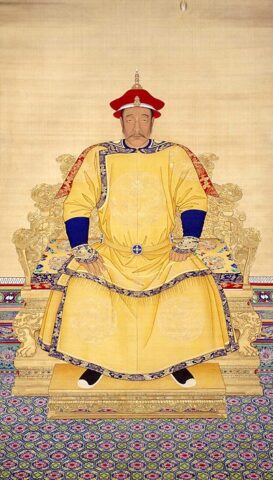
The Manchu leader Nurhaci. who transformed the Manchu kingdom into a formidable power (Public Domain)
War in Korea
The Wanli emperor was not entirely passive, however. An external development which was not ignored began when the Japanese invaded Korea.
The Japanese were intent of conquering that whole of the country, which belonged to the Ming’s international tributary system, and a long-standing ally of China’s. The Ming government had little choice but to come to the rescue of the Koreans, and soon found themselves engaged in major war there. This would last for several years (1592-1598), and although it ended in the repulse of the Japanese invasion forces, it was hugely expensive.
Legacy
The Wanli Emperor’s long reign, and the neglect which characterised much of it, greatly weakened the Ming dynasty’s hold on power. Government corruption and oppression increased, and shortly after the Wanli Emperor’s death, huge peasant rebellions – the inevitable sign of dynastic decline – had broken out. These would engulf much of China, and lead directly to the fall of the dynasty in 1644 at the hands of the Manchu.